Choosing the Right Line Trimmer or Brush Cutter - The Basics
What do you need to consider when choosing your next line trimmer or brush cutter? Join Peter and explore the basics that you need to consider before buying your next trimmer.
How to Choose - The Basics
Why would you need a line trimmer? And where is it useful? And what should you considering when you’re looking at options?
Line trimmers exist to keep properties neat and tidy. That’s their job. To get in where a mower can’t and get rid of those overgrown bits of grass. To give your lawns nice, tidy edges and really complete the job, giving a tidy, finished result.
Whats the difference between a Line Trimmer and a Brush Cutter?
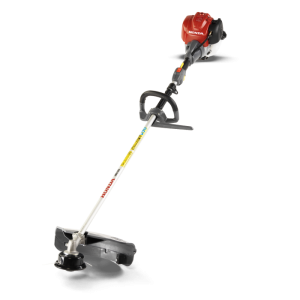
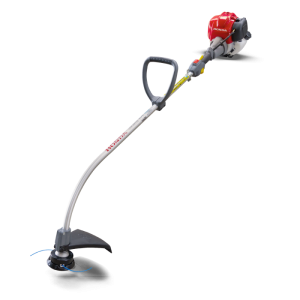
Line trimmers are designed to be fitted with a line trimming head only, ideal for residential applications such as trimming grass, small weeds, triming edges or small lawns. The UMS425 is a great example of a line trimmer. Brush cutters can be fitted with a metal cutting blade for clearing of larger, woody weeds, gorse, brush and shrubs. The UMK range of brush cutters can all run blades for brush cutting.
Key Considerations When Choosing a Trimmer or Brush Cutter
Size of property
In choosing the right type of trimmer, the first thing to consider is the size of your section, or the property you’re wanting to tidy up.
Also, whether you’re just trimming around edges and obstacles, like trees, or whether there are larger areas of grass needing tidying up, complicated planting or landscaping to work around.
The larger the area is, well, the more heavy duty the trimmer required. As a basic rule. Likewise if you’re going to be using it commercially, or simply running it for long periods of time.
So if you have a large property, a lifestyle block for instance, a high country station... you’re probably going to need more of a heavy duty model.
What do you need to cut?
The make-up of the planting/foliage you’re going to be cutting or trimming is the key consideration.
If it’s a fairly simple, typical Kiwi backyard tidy up of stray grass and lawn edges then a line trimmer is definitely the way to go.
However, if you’re on a larger property, lifestyle block, or on a rural property and are more likely to run into heavier work, say thick scrub, roots or branches then a sturdier bladed brush cutter is the way to go. The line trimmer literally won’t usually cut it that case.
Who’s doing the work?
Trimmers come in a range of sizes and weights, depending on factors like power and durability – whether they’re designed for residential use or for more commercial applications.
Some are quite a handful if the person using it is physically smaller or not particularly strong and fit, or when there’s a lot of work to be done – when it’s more than just a 10 minute tidy-up and back inside for a cup of tea.
Which shaft-type - straight or curved?
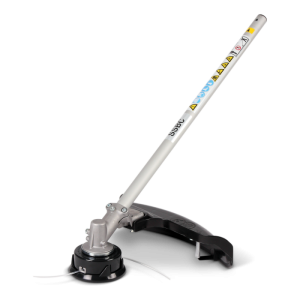
All trimmers use a shaft to transfer power from the engine or motor to the cutting element – either the hard but flexible line or the blade.
Models with a straight shaft offer a longer reach – great for getting in beneath bushes and shrubs. They also tend to be, ergonomically, a better fit for taller users regardless of what they’re being used to cut.
Models with a curved shaft are typically lighter and easy to handle.
Which kind of handle – Loop or bull?
There are two basic types of handle, the loop and the bull (or bike) handle.
The loop is ideal for quite controlled and detailed work, for edges and trimming around trees, posts and similar objects/obstacles.
The bull handle is better for slashing larger areas, covering lots of ground, so you’ll usually find this on the heavy duty and commercial models.
Always look for a model with a harness that will support the weight, and keep the trimmer at an even trimming height.
Next – should you choose a petrol model, or will a battery trimmer be best for your place?
 HHT36 Battery Brush Cutter Kit (Includes 6Ah Battery & Charger)
Engine: Brushless DC 1.6kW
Weight: 6.5 kg (excluding battery)
Blade: Yes (3 tooth)
$547 $1,047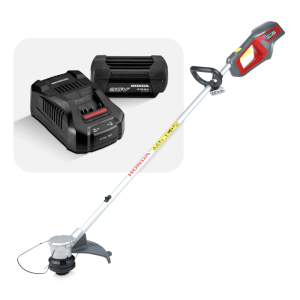 HHT36BXB Battery Lawn Trimmer Kit (Includes 4Ah Battery & Charger)
Engine: Brushless DC 1.2kW
Weight: 3.3kg (excluding battery)
Blade: No
$647 $847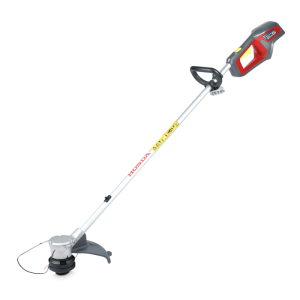 HHT36BXB Battery Lawn Trimmer
Engine: Brushless DC 1.2kW
Weight: 3.3kg (excluding battery)
Blade: No
$449
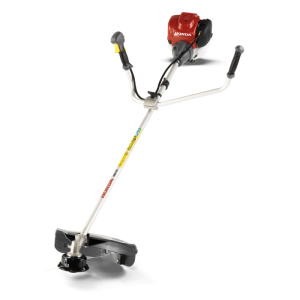
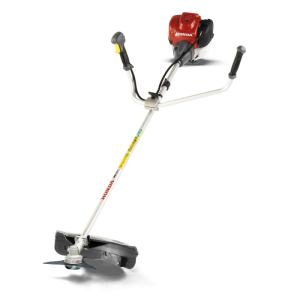
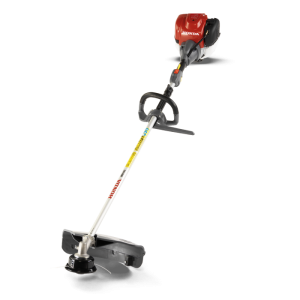
 HHT36 Battery Brush Cutter
Engine: Brushless DC 1.6kW
Weight: 6.5 kg (excluding battery)
Blade: Yes (3 tooth)
$549